The sensory explosion we call *Tadka* is the fiery, fragrant heart of Indian cuisine, a technique transcending mere seasoning to become culinary alchemy. Journey with me to Patna, the bustling capital of Bihar, where this ephemeral sizzle—spices dropped into ghee until they release their hidden potential—dictates the soul of local dishes. It’s more than just technique; it’s the fragrant DNA imprinted onto lentil, vegetable, and curry, turning the mundane into the magnificent. Understanding the *Tadka* unlocks a crucial dialect in India’s vast culinary language.
On 3rd Floor, City centre mall, inside food court, Christian Colony, Lodipur, Patna, Bihar 800023, India
+91 79051 52075
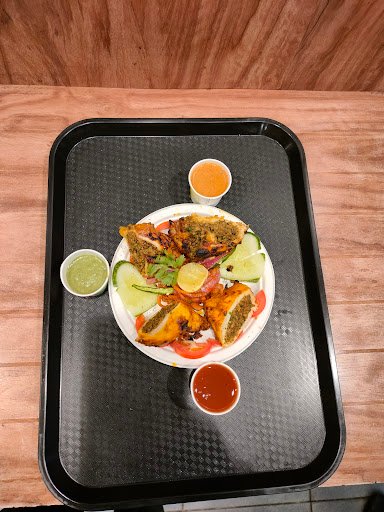
Tucked away on the third floor of the City Centre Mall, Indian Tadka isn’t just another food court stall; it’s a vibrant, concentrated burst of genuine Indian flavor right in the heart of Patna. This spot delivers an experience where the aroma of freshly tempered spices—the very ‘tadka’ of its name—promises authenticity before the first bite even arrives. Earning an impressive 4.7 rating, patrons clearly gravitate toward their skillful execution of regional favorites, making the location (Christian Colony, Lodipur) a key destination for anyone seeking that unmistakable warmth of real Indian cuisine amid the bustle of daily life.
| Friday | 11 AM–10 PM |
| Saturday | 11 AM–10 PM |
| Sunday | 11 AM–10 PM |
| Monday | 11 AM–10 PM |
| Tuesday | 11 AM–10 PM |
| Wednesday | 11 AM–10 PM |
| Thursday | 11 AM–10 PM |
More information
What exactly constitutes ‘Tadka’ in the context of Indian cuisine?
‘Tadka,’ often referred to as tempering or ‘chaunk,’ is a fundamental South Asian culinary technique where whole or ground spices are briefly roasted in hot fat, such as ghee or oil. This process serves a dual purpose: it extracts and concentrates the essential oils and aromas of the spices, and the resulting infused fat is then poured over a finished dish—like lentils (dal), vegetables, or yogurt—just before serving. This final addition is crucial as it elevates the flavor profile and presentation of the dish significantly, analogous to finishing a complex piece of music with a decisive, resonant chord.
How does the flavor imparted by ‘Tadka’ differ from spices mixed in at the beginning of cooking?
The difference lies in the stage of introduction and the physical transformation of the spices. Spices mixed early in the cooking process tend to mellow, infuse their flavor subtly throughout the dish’s matrix, and sometimes lose volatile aromatic compounds due to prolonged heat. In contrast, ‘Tadka’ spices are briefly exposed to high, direct heat, which volatizes their essential oils quickly, leading to a sharp, immediate, and more potent aromatic impact upon serving. It is this final, powerful infusion that defines the dish’s character, making it akin to adding top notes in perfumery.
Are the ingredients used for a ‘Tadka’ consistent across all regions of India?
No, the components of a ‘Tadka’ are highly regionally variable. While fundamental elements like cumin seeds (jeera) and mustard seeds (rai) are widely used, the specific blend changes based on geography and the dish being prepared. For instance, a ‘Tadka’ in South India often prominently features curry leaves and black mustard seeds, perhaps incorporating asafoetida (hing), whereas a North Indian preparation might favor cumin, dried red chilies, and potentially dried mint or coriander powder. The choice of tempering medium, like using ghee versus a neutral oil, also contributes to this regional diversity.
What are common spices or aromatics reliably found in a standard ‘Tadka’ preparation?
A standard, foundational ‘Tadka’ generally relies on a synergistic base of robust, easily bloomed spices. Cumin seeds (jeera) are nearly universal, as they splutter immediately when hot oil is introduced. This is frequently accompanied by mustard seeds (rai), which pop when they reach temperature, and often a dried red chili for heat. Depending on the desired aromatic depth, asafoetida (hing) is added for its pungent, onion-like undertones, especially crucial in vegetarian dishes, ensuring a robust flavor foundation.
Related Posts
LIQUORE, Family Restaurant
Mahi’s Kitchen-The taste of Biriyani
Azad Hind Dhaba
Kaafila
Food Express
C2 RESTAURANT
Bombay Shiv Sagar
Badh-E-Dewan
Añadir comentario